What will define the next era of television advertising?
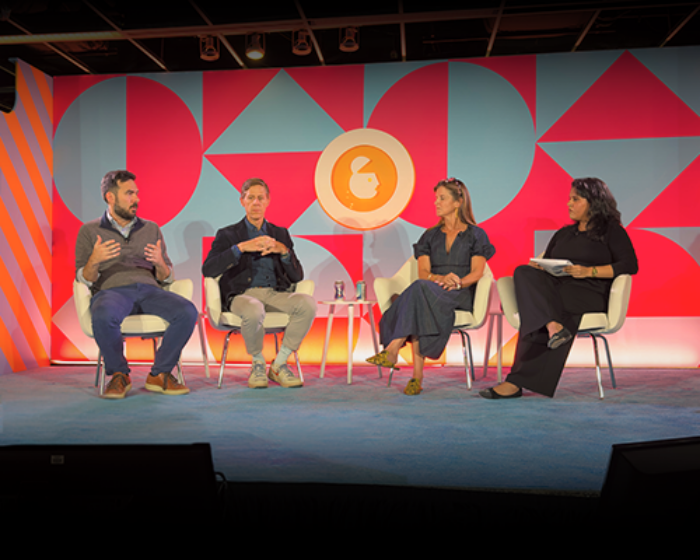
That question was at the heart of a series of conversations with senior executives from some of Europe’s leading broadcasters and media companies, including CANAL+ BRAND SOLUTIONS, Channel 4, FranceTV Publicité, RMC BFM ADS, Talpa Media and TF1 PUB.
While perspectives varied by market, there was remarkable alignment around the opportunities and challenges facing the industry. From outcome-based measurement and AI-powered innovation to audience engagement and greater interoperability, the discussions revealed a shared vision for how television can continue to evolve in an increasingly fragmented media landscape.
Here are the key insights that emerged from those conversations.
Proving Value Remains a Top Priority
Across the series, advertisers’ growing demand for measurable outcomes emerged as a clear priority. Leaders expressed the importance of improving transparency, performance insights and solving for simplicity.
Emmanuelle Godard, Digital, Data & Innovation Director at CANAL+ BRAND SOLUTIONS, explained that their sales house has introduced solutions to better measure campaigns and help advertisers meet their campaign objectives. She added that reaching the right audience in brand-safe content remains essential, with “useful reach as a key KPI”.
Likewise, Olivier Rozental, Digital Transformation Director at RMC BFM ADS, pointed to Beyond TV, a new offering designed to measure campaigns fragmented across multiple platforms through a single tool. While Dorine van Mullem, COO of Talpa Media, argued that the industry must make data transparent enough to shift the conversation from clicks and views to advertiser growth: “Our main goal is to make all the data transparent, so we can discuss outcomes – not only the metrics themselves.”
Audience Engagement in a Fragmented Media Landscape
As audiences gain access to more content across more platforms, broadcasters are combining premium programming, broad distribution and lighter advertising experiences to capture and retain attention.
Nathalie Dinis, Deputy Managing Director for Trade and Head of Sales at FranceTV Publicité, said the company has measured attention across both digital and linear television, identifying key advertising content genres and ad load as key drivers. “We broadcast fewer than three minutes of advertising per hour, and we know that is critical for recall and audience attention,” she explained. Godard similarly highlighted CANAL+’s short breaks and limited number of ads per pod, designed to improve the viewer experience, ad recall, and purchase intent.
Philippe Boscher, Head of Digital Marketing – Data – Research – Addressable TV and Innovation at TF1 Publicité stressed the importance of “major event-driven” programming, as well as “local content, news and sports” to be distributed across “televisions, smartphones and other streaming partner platforms”. David Amodio, Head of Sales at Channel 4, echoed that approach: “If you make amazing content, audiences will find it.” He described Channel 4’s investments in drama, platform distribution and social content as an ecosystem strategy.
Rozental described the same audience-first principle at RMC BFM ADS: creating different offers across FAST and native CTV, streaming, and YouTube, with “very short ad breaks tunnels of around 90 seconds.”
Innovation Is Reducing Complexity
Technology featured heavily in the conversations as media companies look to simplify buying processes, unifying linear, addressable and streaming inventories, improve cross-platform measurement and meet changing viewing habits.
Van Mullem sees AI as an opportunity to “get rid of some layers” rather than adding to them. In fact, Talpa Media launched its first agentic advertising campaign to reduce friction, improve transparency and drive stronger advertiser growth. Boscher concurred calling for simpler buying and to “break down silos across linear, addressable and streaming, by creating unified offerings”. Moreover, Godard described AI as a “real accelerant” for personalized advertising and creative possibilities, citing CANAL+’s Rat+ AI-generated campaign as an early example to showcase how AI can be a “tremendous opportunity for smaller businesses to produce spots easily and at lower cost”, while also allowing “to expand the creative territory” for other businesses.
Collaboration Will Shape the Next Phase of Growth
High on the agenda, industry collaboration also emerged as essential to widening access to TV, improving interoperability, and establishing trusted measurement.
Amodio, described broadcaster collaboration as a “formidable force”. He highlighted Universal Ads’ potential to lower barriers to entry for small and medium-sized businesses, alongside Lantern’s ability to measure outcomes in a privacy-safe environment: “What customers really want is the measurement of performance and the power of TV.”
Dinis also pointed to distribution partnerships as a route to younger audiences: France Télévisions is accelerating its platform distribution strategy, making more than 20,000 hours of news and complementary programming available on YouTube, following the rollout of free access on Amazon Prime last year.
A final question was thrown at everyone: What will TV look like in five years?
Although responses varied, a consistent vision emerged around convergence. Boscher expects a more platform-based and programmatic television market, unifying linear and streaming distribution with outcome measurement and AI. Van Mullem went further: “In five years, I don’t think there will be a discussion about television, online video or shorts – it will just be premium video content, delivered through a more frictionless ecosystem’’.
Amodio hopes TV will gain its “fair share” through quality and trust, attract more advertisers and become more prominent on multiple platforms, making brand-safe, professionally produced content easier to find. Rozental anticipates more automated, agentic buying, supported by “fully operational cross-video measurements.” While Godard expects advertising to become “more personalized, interactive, measurable, and AI-enabled”.
Finally, Dinis emphasized television’s enduring social role: “Television will remain the one medium capable of creating a collective experience – making an entire country feel the same emotion at the same time.” As AI expands, she believes the ability to create shared culture will become even more valuable.
Looking Ahead
The conversations highlighted a clear and shared vision for the future of television across Europe. While each broadcaster approaches the market from a unique perspective, there was broad agreement that success will be driven by three core imperatives: demonstrating measurable business outcomes, creating engaging premium viewing experiences and reducing complexity across the advertising ecosystem.
At the same time, leaders pointed to the importance of collaboration, innovation and interoperability in ensuring television remains accessible, effective and competitive in an increasingly fragmented media landscape. Whether through advancements in AI, unified measurement, programmatic trading or new distribution partnerships, the industry is working toward a more connected and outcome-focused future.
Taken together, these insights offer a valuable snapshot of how Europe’s leading broadcasters are responding to change today and helping shape the future of premium video for advertisers, viewers and the wider media ecosystem.
- These insights were captured in this year’s MediaTalks Summer Series, please watch the full video here: